Keeping dogs happy in recovery or rehab
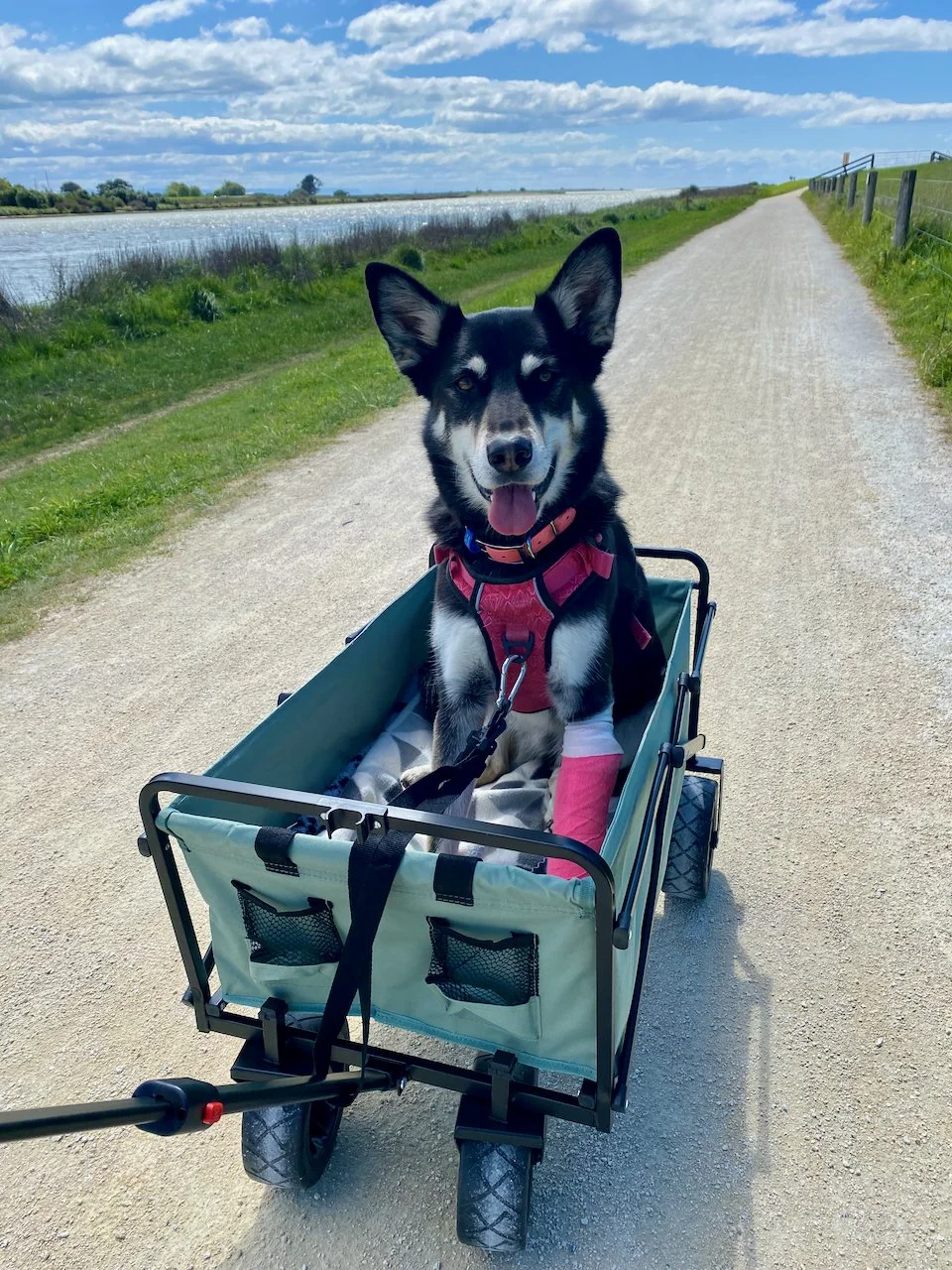
Keeping your dog happy and safe during recovery from surgery or injury can be hard, especially when they are physically restricted for long periods. The good news is that there are now a huge variety of creative and adaptive ways to keep dogs happy and engaged!
We call this enrichment. Instead of exercising their bodies, enrichment gives their brains a workout and provides opportunities for dogs to engage in natural behaviours. It can help keep them calmer, give them something positive to focus on, and make the recovery period more enjoyable.
When we talk about enrichment, it isn’t just about food toys. The intention is to give animals creative outlets for natural behaviours that they might not otherwise be able to express.
Many zoos have wonderful enrichment programmes for the animals in their care to help keep them happy and engaged while in captivity. For dogs in recovery, enrichment often focuses on scavenging for food, but it can also involve:
Sniffing and listening – sensory enrichment
Problem solving and learning new things – mental stimulation
Spending time with calm dogs or human friends – social enrichment
Different kinds of movement – particularly when they can be safely incorporated into physiotherapy exercises
Think about what your dog loves to do, and don’t restrict that list to things you personally enjoy! There are ways we can safely facilitate behaviours like destruction and “stealing”, and even give vocal dogs an opportunity to have a yell. Whether they’re being kept safe in a crate, play pen or on lead while in recovery, almost all of these activities can be enjoyed by your dogs.
Food & Nutrition
I have a whole blog post about “Ditching the Bowl” which has loads of different ideas for dogs of all ages, physical capabilities and motivations. Doing these ideas inside a crate can have the added benefit of treats becoming hidden in the folds of their blankets or bed to snuffle out too.
The intention isn’t to always make food enrichment difficult or make it last as long as possible. Instead, it’s about making food fun and tapping into that scavenger brain.
Problem solving, sniffing, chewing and licking can all be rewarding and calming activities for dogs. We are incredibly lucky to have a huge range of enrichment toys and puzzles available to buy, but there are also endless DIY options.
Try:
Scattering treats in the grass or in their bedding
Hiding treats in egg cartons
Putting food into cardboard rolls
Using empty plastic bottles only when safely supervised
Rolling treats up in towels
Creating simple food-search games around the house (if low impact movement is allowed - can just be hidden under a blanket or in a snuffle puzzle mat!)
The best enrichment is often simple!
Sensory Enrichment
Smell
Smell is a huge enrichment opportunity for dogs. The olfactory part of a dog’s brain is much more developed than ours, and sniffing and investigating scents can be incredibly engaging.
Think about ways your dog can still enjoy sniffing while confined or restricted in a crate, play pen or on lead.
You could bring them:
Sticks or leaves from the park or beach
Fur from other animals (I’m happy to supply goat fur in spring – we have a LOT!)
Blankets or clothing that other dogs or animals have touched or slept on
Interesting objects from outside
And even things that — prepare yourself — other dogs may have peed on!
For a dog, these can all provide fascinating information to investigate.
Sound
Sound is another interesting area to explore. While hearing isn’t a dog’s primary sense, they have excellent hearing and many dogs enjoy listening to a variety of sounds.
There are lots of calming music playlists for dogs available on YouTube and Spotify. Some dogs simply enjoy having the radio or television on, or even listening to you while you’re on a Zoom or phone call.
I know that always sends my dogs to sleep!
Just remember that variety is key. Too much of anything can eventually become boring or frustrating, so mix things up and pay attention to what your dog actually enjoys.
Mental Stimulation
The food enrichment ideas above provide plenty of mental stimulation, but there are lots of other ways to give your dog’s brain a workout without requiring much physical movement.
Trick Training
Trick training can be a great option and can be done by almost anyone in the family if they’re keen.
There are plenty of videos online — and I have lots that I’m always happy to share — showing how to teach dogs things like:
A target, such as booping their nose to your hand or a ball on a stick
Paw, shake, wave and high five
A chin rest on your hand or an object
Putting their nose into a cone, such as the Cone Game
Nudging a ball back and forth with you or into a “goal”
Barking or “speaking” on cue — particularly fun for vocal dogs
The waiting game, where you gradually increase the number of treats, their proximity and the patterns you arrange them in, before giving your release cue
That last one can become frustrating or stressful for some dogs, so take it slowly and make sure they’re still having fun.
Scentwork
As mentioned above, using their nose is a fantastic brain workout.
Basic scentwork games are a great option, such as the Shell Game. You could even start working on a nose hold or “freeze” indication if you want to eventually get into formal scent sports with your dog.
Social Enrichment
For dogs who love other dogs — especially those who are used to group walks, daycare or the dog park every day — being confined can really suck!
But being physically restricted doesn’t necessarily mean they have to be socially isolated.
Staying Part of the Family
Setting up different areas of the house where your dog can safely spend time with the family can make a huge difference.
They might enjoy moving between:
Their favourite spot in the sunshine
A bed near the fireplace
Cool, shady spots indoors or outdoors
A crate or playpen in the living area
A quiet spot where they can watch what everyone else is doing
Note - make sure they are safe and supervised - especially if in the sun or by a fireplace / heater and can’t move themselves away.
FOMO is a huge part of what can make rehabilitation difficult.
Setting up different crates, playpens or tether spots with comfortable beds allows you to safely move your dog around the house throughout the day, particularly during quieter periods.
Visitors
If your dog has calm, appropriate dog or human friends who can visit, this can be a wonderful way to maintain their social connections.
For many social dogs, it will be easiest to have them in their crate initially to limit that burst of excitement until everyone has settled. They may have to stay in their crate for the visit but they can still have sniffs and ‘talk’ to each other!
Getting Out & About
Depending on your dog’s injury and restrictions, they may also be able to enjoy outings in a pram, trolley or on car rides.
When my dog Storm was in a cast for several months and very limited in her physical activity, I bought her a little trolley from The Warehouse and took her out for lots of adventures. She loved it! For reactive dogs or those who need more security / safety, there are also great covered, zip-up buggies which have that added layer to keep them in and other dogs / people out.
I made sure Storm was safely secured by clipping her harness to both ends of the trolley, and we started with places where all the good stuff came to her. I avoided taking her straight to her favourite parks or places where she normally would have been running around and sniffing for bunnies.
The pet store was one of our first outings. People would come over, give her lots of love and treats, and she could experience the world without needing to run around.
I slowly built things up from there until we could eventually visit some of her favourite places — even the dog park!
Important: We generally stayed a reasonable distance away from other dogs. When dogs are confined, physically restricted, in pain or frustrated, they can be more likely to react defensively.
Storm certainly dealt out a few telling-offs to dogs who tried to clamber into her trolley to get to her!
Physical Enrichment
Depending on your dog and their specific limitations, there may be opportunities to safely facilitate movement in fun and interesting ways.
Always follow your veterinarian’s or physiotherapist’s advice about what movements are appropriate for your individual dog.
As mentioned above, trick training involving things like targeting, chin rests, gentle paw movements, nudging a ball and supervised interaction with objects can provide opportunities for safe movement.
Even supervised destruction can be enriching. Cardboard boxes and similar materials can be fun to shred, provided they are appropriate for your dog and they aren’t swallowing pieces.
You could also try something like a Magic Destuffer Ball.
Touch
Touch is another area worth exploring.
In my De-Stress blog post, I cover some examples of calming canine massage techniques, including Tellington TTouch. You can also find some useful information about dog massage here.
Again, keep things gentle and always take your dog’s physical limitations and comfort into account.
Give Your Dog Something to Do
That should give you plenty of ideas to get started with your dog!
The most important thing is to make enrichment as fun and easy as possible for both of you. Recovery can be frustrating for everyone involved, and feeling sad or guilty about restricting your dog can make the whole process even harder.
Hopefully there are plenty of ideas here that you can explore together to make your dog’s recovery a little more interesting — and both of you a little happier!
If you have questions about how to adapt enrichment activities for your dog’s specific needs, please reach out.
A huge thanks to Maria Alomajan at Canine by Nature for helping with some additional inspiration for this post!